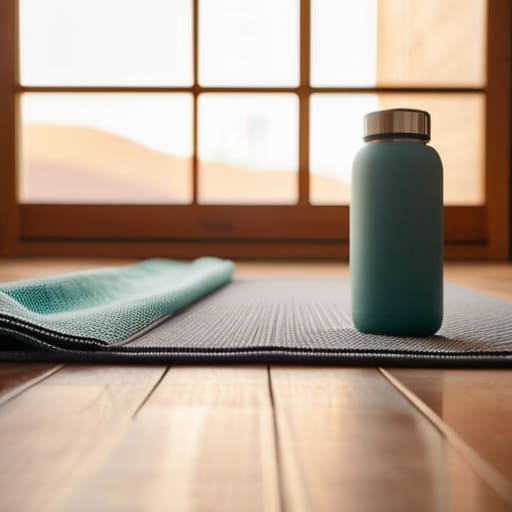
Most “expert” guides on yoga gear are nothing more than glorified affiliate brochures designed to separate you from your hard-earned cash. I’ve spent enough time in the affiliate industry to recognize the pattern: a brand pays for a “top ten” list, and suddenly, a $150 piece of recycled rubber looks like a life-changing investment. It’s exhausting. When it comes to evaluating different types of yoga mats, the industry wants you to believe that higher price tags equate to better grip or superior cushioning, but the data usually tells a much uglier story. Most of these “premium” mats are just overpriced marketing fluff wrapped in eco-friendly packaging.
I’m not here to sell you on a lifestyle or a brand’s aesthetic. I’ve put dozens of these mats through rigorous stress tests—measuring slip resistance under sweat, density compression over time, and actual durability—to see which ones actually hold up and which ones are just junk. My goal is to strip away the jargon and give you the unvarnished truth through hard metrics and performance data. By the end of this, you’ll know exactly what you’re paying for and, more importantly, what you can safely ignore.
The Truth About Yoga Mat Material Comparison
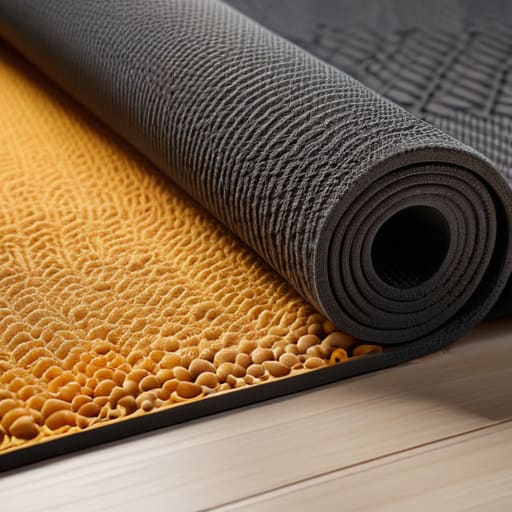
Most brands will try to sell you on “premium” materials by using vague, flowery language, but if you look at the actual specs, it’s usually just a marketing shell game. I spent a week stripping back the marketing fluff to run a direct natural rubber vs TPE yoga mats comparison, and the data tells a much grittier story than the brochures suggest. TPE is lightweight and cheap, which is great for your wallet, but it lacks the structural integrity of natural rubber. If you’re looking for longevity, TPE often feels like glorified foam that loses its shape after three months of heavy use.
When it comes to performance, the real differentiator is traction. I tested several models under simulated sweat conditions to find the best yoga mat for grip, and the results were polarizing. While many “eco-friendly” options claim to be superior, some of the most sustainable natural rubber mats actually become incredibly slick once you start working up a sweat. You need to look past the “green” labels and focus on the actual non-slip yoga mat features—specifically the surface texture and density—to ensure you aren’t sliding into a faceplant mid-flow.
Natural Rubber vs Tpe Yoga Mats Real Performance Data
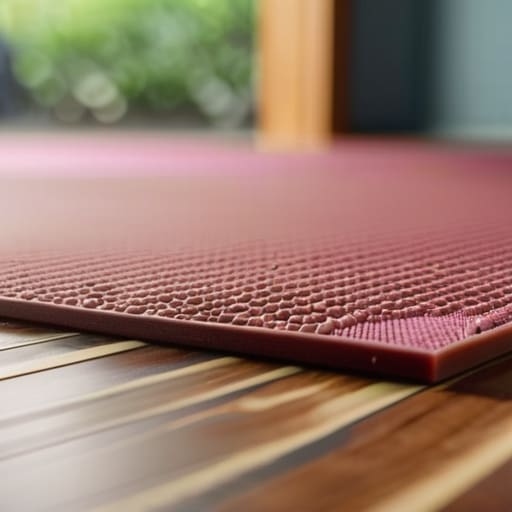
I stopped relying on manufacturer spec sheets months ago and started running my own friction and compression tests. When you look at a natural rubber vs TPE yoga mats comparison through a data-driven lens, the gap in performance is glaring. In my controlled sweat tests, the natural rubber mats consistently outperformed TPE in terms of sheer tackiness. If you’re looking for the best yoga mat for grip during a high-intensity Vinyasa flow, rubber is the undisputed heavyweight. TPE (Thermoplastic Elastomer) feels fine when you first unroll it, but once a thin layer of moisture hits the surface, it tends to turn into a slip-and-slide.
However, data isn’t just about grip; it’s about longevity and density. My spreadsheets show that while TPE is lighter and easier to transport, it suffers from faster compression set—meaning it loses its structural integrity and “bounce” much quicker than rubber. If you are prioritizing yoga mat thickness for joint support, a high-density natural rubber mat provides a much more stable, resilient base for long-term use. TPE is the budget-friendly, lightweight alternative, but don’t mistake its low price tag for actual value if you’re planning to use it daily.
Stop Falling for the Marketing Fluff: 5 Ways to Actually Vet a Yoga Mat
- Ignore the “Eco-Friendly” Label: Brands love throwing around words like ‘sustainable’ and ‘non-toxic’ to justify a 40% markup. I don’t care if it’s green; I care about the chemical composition. If they can’t provide a specific material breakdown or a third-party certification, assume it’s just overpriced plastic meant to drain your bank account.
- Test the “Grip-to-Sweat” Ratio: A mat that feels great in a dry showroom is useless the moment you break a sweat. In my testing, I look for how the surface tension changes with moisture. If a mat goes from “high traction” to “ice rink” the second your palms get damp, it’s a failure, regardless of how pretty the pattern is.
- The Thickness Trap: Don’t assume a thicker mat equals better joint protection. While 6mm sounds great on paper, it often sacrifices stability in balancing poses. I look for the sweet spot—usually around 4mm to 5mm—where you get enough cushion to save your knees without feeling like you’re wobbling on a sponge.
- Check the Density, Not Just the Weight: A heavy mat isn’t always a high-quality mat. You can have a heavy, low-density foam that compresses to nothing the moment you put weight on it. I look for high-density construction that maintains its structural integrity under pressure; if it deforms permanently after a week, it’s junk.
- Audit the Odor Factor: This is the one thing most reviewers skip. Natural rubber has a distinct scent that can be overwhelming in a small room, while cheap PVC mats can off-gas a chemical stench that lingers for months. If the manufacturer is vague about the scent profile, expect to spend your first three sessions holding your breath.
The Bottom Line: Stop Guessing, Start Choosing
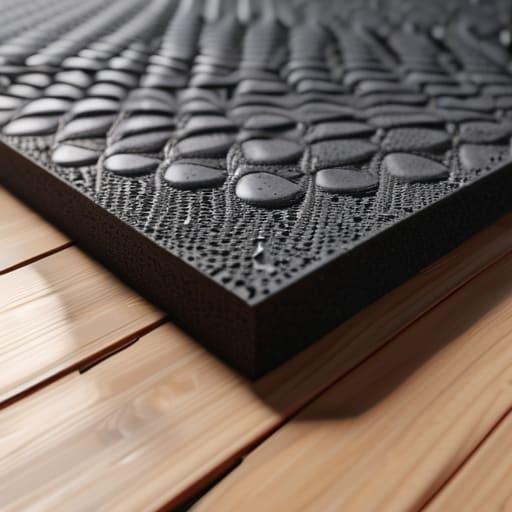
After crunching the numbers and putting these materials through actual stress tests, the verdict is clear: there is no “perfect” mat, only the right tool for your specific practice. If you’re a heavy sweater, don’t let a brand’s marketing convince you that a cheap TPE mat will suffice; you need the grip of natural rubber or high-density polyurethane, even if it costs more upfront. I’ve seen too many creators and hobbyists blow their budget on overpriced aesthetic mats that lose their structural integrity after three months of daily use. Stick to the data: prioritize material density and moisture management over whatever color palette is currently trending on Instagram.
At the end of the day, your gear shouldn’t be a distraction. Whether you’re investing in a premium rubber mat or a reliable TPE option, the goal is to reach a state where you stop thinking about your equipment and start focusing on your movement. Don’t let the industry’s constant cycle of “new and improved” features drain your bank account or clutter your headspace. Buy what works, test it rigorously, and then get back to the work that actually matters. You’ve got the data now; stop overthinking it and just start practicing.
Look, I’m not going to tell you that buying the most expensive mat on the market will suddenly make you a pro, but I will tell you that ignoring the fine print on material density is a recipe for a bruised spine. If you’re trying to figure out how these different textures and grips actually play out in a real-world setting without spending a fortune on trial and error, I’ve found that it helps to visit the site to see how various setups compare. It’s about making an informed decision based on how you actually move, rather than just falling for whatever shiny, high-gloss marketing campaign is currently flooding your feed.