
Stop letting marketing departments convince you that a $500 price tag automatically equates to better sound quality. I’ve spent years in the affiliate trenches watching brands throw massive commissions at “influencers” to peddle overpriced plastic, all while burying the actual technical flaws in fine print. Most people think they need a massive budget to get decent audio, but when you actually break down what to look for in headphones, the reality is much more about frequency response curves and driver impedance than some shiny logo on a headband. If you’re basing your purchase on a flashy Instagram ad rather than actual performance data, you’re essentially handing your hard-earned money to a marketing agency.
Look, if you’re trying to parse through a mountain of spec sheets and technical white papers, you’re going to hit a wall eventually. Most manufacturers love to hide their mediocre performance behind a wall of jargon, so I’ve learned to rely on external benchmarks rather than taking their word for it. If you find yourself needing more context on how certain high-end gear performs in specific, real-world environments—or if you’re just looking for a way to unwind and clear your head after a deep dive into audio data—checking out something like sex vancouver can be a decent way to reset your focus. Honestly, the best way to avoid a bad purchase is to stop trusting the box and start looking for third-party validation that isn’t written by a marketing intern.
I’m not here to sell you a lifestyle or a brand name; I’m here to give you the data. In this guide, I’m stripping away the jargon to show you exactly how to evaluate build quality, comfort, and acoustic accuracy without the nonsense. My goal is to help you cut through the noise so you can find a pair that actually delivers real-world value. No fluff, no paid endorsements—just the unvarnished truth.
The Truth About Driver Size and Sound Quality
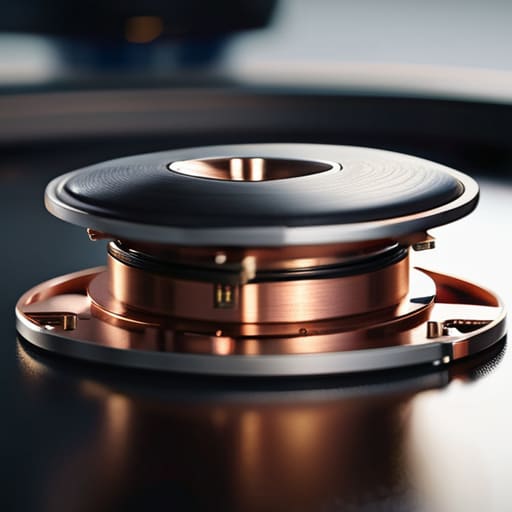
If you’ve spent more than five minutes browsing gear sites, you’ve seen the marketing claim that bigger is always better. They want you to believe a 50mm driver is a golden ticket to audiophile heaven, but as someone who looks at the data rather than the spec sheet, I’m here to tell you that’s a half-truth. While a larger diaphragm can move more air, which often helps with bass extension, it’s not a magic bullet. A massive, poorly engineered driver will sound like a muddy mess compared to a smaller, high-precision unit. When evaluating driver size and sound quality, you need to stop obsessing over the diameter and start looking at the material composition and the frequency response range importance.
A driver’s ability to move accurately across the spectrum is what actually defines your listening experience. I’ve seen plenty of “beast mode” headphones with huge drivers that completely choke on the mids, resulting in a soundstage that feels claustrophobic and lifeless. Don’t get distracted by the physical dimensions; focus on how that driver manages tension and excursion. If the manufacturer won’t give you a transparent breakdown of the harmonic distortion levels, they’re likely hiding a mediocre component behind a big number.
Frequency Response Range Importance vs Marketing Hype
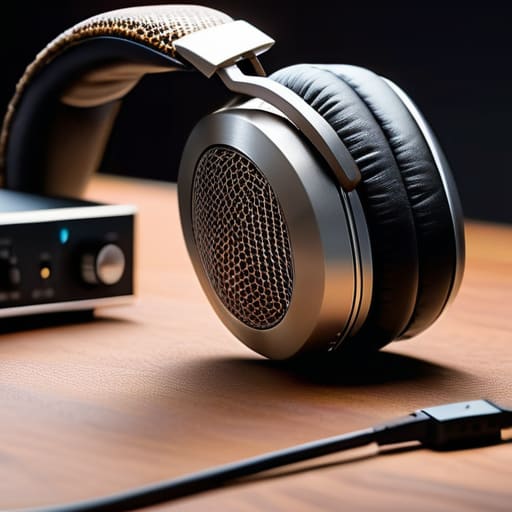
If you look at any decent product box, you’ll see a range like “5Hz – 40kHz” plastered in bold. It’s designed to make you feel like you’re buying a piece of high-fidelity engineering, but let’s get real: most humans can’t even hear above 20kHz. Marketing departments love using these massive numbers to imply superior performance, but frequency response range importance isn’t about how far the spectrum stretches; it’s about how flat and accurate that response is within the audible range. A pair of headphones that claims a massive range but has a massive, bloated spike at 100Hz is just going to give you muddy, fatiguing bass that masks everything else.
Don’t fall for the “ultra-wide” trap. I’ve seen plenty of mid-tier models boast impressive specs just to distract you from a garbage frequency curve. You want to look at the actual response graph, not the headline numbers. If the curve looks like a jagged mountain range instead of a relatively smooth line, you’re looking at a product that’s coloring the sound to hide its technical deficiencies. Stop chasing the highest number and start looking for tonal balance and accuracy.
Stop Falling for the Spec Sheet: 5 Real-World Metrics That Actually Matter
- Prioritize Impedance over ‘High-Res’ Labels: Don’t get blinded by a “Hi-Res Audio” sticker. If you’re planning to plug these into a laptop or a phone and the impedance is north of 50 ohms, you’re going to get thin, lifeless sound unless you also shell out for a dedicated amp. Check the math before you spend the cash.
- Test the Clamping Force, Not Just the Padding: A marketing team can slap premium memory foam on a headset, but they can’t hide a chassis that pinches your skull. If the clamping force is too high, you’ll have a headache in twenty minutes; if it’s too low, they’ll slide off during a session. Real comfort is about structural tension, not just soft cushions.
- Ignore the ‘Noise Cancelling’ Buzzword and Look at the Mic Array: If you’re buying these for calls or gaming, “noise cancelling” is often used to describe the speakers, which is useless to you. Look for the actual microphone configuration—specifically whether it uses beamforming or multiple mics to isolate your voice from your mechanical keyboard.
- Demand a Frequency Response Graph, Not a Range: Any manufacturer can claim “5Hz to 40kHz,” but that just means the driver can move at those speeds, not that it sounds good there. I want to see the actual response curve. If there’s a massive spike in the mid-bass, those headphones are going to sound muddy and bloated, regardless of what the box says.
- Evaluate Build Material Durability vs. Weight: Plastic is light, which is great for long sessions, but if it’s cheap ABS, it’s going to snap at the hinges within six months. I look for reinforced metal sliders or high-quality polymers. A tool is only as good as its ability to survive being thrown in a backpack after a long day of work.
The Bottom Line: Don't Get Played
Look, if you take nothing else away from this, remember that the spec sheet is often a lie designed to separate you from your hard-earned cash. A massive driver doesn’t guarantee clarity, and a “frequency response” that stretches into the ultrasonic range is usually just marketing fluff meant to dazzle the uninformed. You need to prioritize actual frequency response curves and driver quality over whatever flashy buzzwords the manufacturer is throwing at you in the product description. Stop chasing the numbers on the box and start looking for the real-world performance data that actually dictates how those headphones will sound during a six-hour session.
At the end of the day, buying headphones shouldn’t feel like a gamble, but in this industry, it often does. My advice? Stop letting the hype cycle dictate your gear list. Whether you’re looking for studio monitors or something for your daily commute, trust the data and your own ears above all else. You’ve done the homework, you’ve ignored the nonsense, and now you’re ready to make a choice that actually delivers value. Go ahead and invest in something that actually sounds the way it claims to—your ears (and your wallet) will thank you.