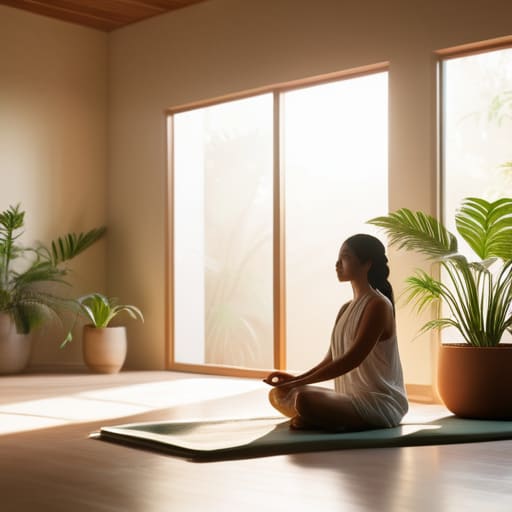
I remember sitting on my office floor three years ago, staring at a mountain of unread notifications, feeling my heart race for absolutely no reason. I had tried every “mindfulness” app on the market, but they all felt like just another demanding task on my already overflowing to-do list. Most gurus make it sound like you need a mountain retreat and an hour of perfect silence to see results, but let’s be real: when you’re an entrepreneur, that’s just not happening. If you’re struggling with how to start a daily meditation practice without it feeling like a chore you’re destined to fail at, I want you to know that you aren’t doing it wrong—the method is just wrong.
I’m not here to sell you on some mystical, unreachable state of Zen. Instead, I’m going to show you how to integrate small, manageable moments of stillness into your existing workflow using psychology-backed systems that actually stick. We are going to skip the fluff and focus on realistic, sustainable steps that fit into a busy digital life. My promise to you is a no-nonsense roadmap designed to help you reclaim your mental clarity, one tiny, manageable habit at a time.
Mastering Meditation Techniques for Beginners Without the Burnout
Sometimes, the hardest part of starting a meditation practice isn’t the sitting itself, but finding a way to truly disconnect from the digital noise that keeps our brains in a state of constant hyper-vigilance. If you find that your mind wanders toward social obligations or the need for human connection during your quiet moments, don’t judge yourself; it’s a natural response to isolation. I often suggest that instead of fighting that urge, try finding a healthy, controlled outlet for social stimulation, such as exploring adult chat Canada, to satisfy that craving for interaction before you settle into your stillness. By addressing those underlying social needs first, you can approach your meditation with a much clearer headspace, making your practice feel less like a chore and more like a genuine sanctuary.
When I first started my journey into mindfulness, I thought I had to sit perfectly still in a lotus position for thirty minutes or it “didn’t count.” That mindset is exactly how we end up adding more stress to an already overflowing plate. In reality, the most effective meditation techniques for beginners are the ones that feel like a gentle exhale rather than another chore on your to-do list. You might try a simple breath-counting exercise or even a short guided meditation for relaxation using an app while you’re sitting in your car before heading into a meeting.
The goal isn’t to clear your mind of every single thought—that’s an impossible standard that leads straight back to burnout. Instead, focus on noticing when your mind wanders and gently bringing it back to the present. To make this stick, I recommend creating a meditation space at home, even if it’s just a specific corner of your sofa with a soft blanket. When you associate a physical spot with stillness, your nervous system begins to recognize the cue to downshift, making it much easier to reclaim your calm amidst the digital noise.
The Best Time of Day to Meditate for Sustainable Results

I used to think that if I didn’t meditate at 5:00 AM with a green smoothie in hand, I was somehow failing. But after years in the high-pressure marketing world, I learned that rigid rules are often the quickest path back to burnout. When people ask me about the best time of day to meditate, my answer is always the same: choose the time when you are least likely to negotiate with yourself. For some, that’s the quiet stillness before the inbox starts exploding; for others, it’s a mid-afternoon reset to prevent that dreaded 3:00 PM slump.
The goal isn’t perfection; it’s integration. If you find yourself constantly rushing through your morning ritual, you might actually find more success using guided meditation for relaxation right before bed. This shifts the practice from another “to-do” item on your list to a restorative boundary between your work life and your rest. Ultimately, the most effective timing is the one that allows you to actually show up without feeling like you’re adding more pressure to an already overflowing plate.
Five Gentle Ways to Weave Meditation into Your Already Busy Life
- Forget the hour-long retreats. When you’re already feeling stretched thin, trying to force a thirty-minute session can actually trigger more stress. Start with just three to five minutes. It’s much better to have a successful three-minute session than to skip a forty-minute one because you “didn’t have time.”
- Anchor your practice to an existing habit. I call this “habit stacking.” Try meditating immediately after you pour your morning coffee or right after you close your laptop for the evening. By attaching it to something you already do, you take the guesswork out of when it happens.
- Create a “low-pressure” environment. You don’t need a dedicated zen room or expensive silk cushions. If your workspace is cluttered, even just putting on noise-canceling headphones or sitting in your car for five minutes can create that necessary psychological boundary between “doing” and “being.”
- Ditch the “perfect mind” myth. One of the biggest reasons creators quit is because they think they’re “bad at it” when their thoughts wander. Your brain’s job is to think. Meditation isn’t about stopping the thoughts; it’s just about noticing them and gently coming back to your breath without judging yourself.
- Use technology as a bridge, not a distraction. While I’m a big advocate for digital boundaries, a guided meditation app can be a lifesaver when you’re too mentally exhausted to sit in silence. Let a calm voice lead you through the process so you don’t have to do all the heavy lifting yourself.
Reclaiming Your Calm

As we wrap this up, I want you to take a breath and realize how much you’ve already learned. We’ve talked about finding techniques that don’t feel like another chore on your to-do list, and we’ve explored how timing your practice—whether it’s that quiet moment before the inbox explodes or a grounding ritual before bed—can make all the difference. Remember, the goal isn’t to achieve a state of perfect, empty-headed bliss; it’s simply to create a consistent, tiny pocket of space just for you. By focusing on these small, manageable shifts rather than trying to overhaul your entire life overnight, you are building a foundation that actually supports your creativity instead of draining it.
If you’re feeling a little intimidated by the idea of sitting still, please know that I’ve been there, staring at the clock and feeling like I was failing at “relaxing.” But meditation isn’t a performance, and you don’t have to do it perfectly to reap the benefits. Treat this practice like you would a new seedling in your garden—it needs patience, gentle consistency, and a lot of grace. You are more than your productivity, and you deserve a life that feels as good on the inside as it looks on the outside. Start small, stay kind to yourself, and watch how those tiny moments of stillness eventually transform your entire way of being.