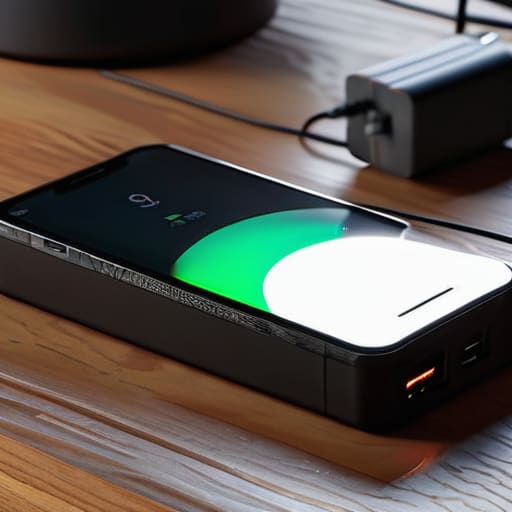
Stop falling for the “mAh arms race.” Most manufacturers will scream about massive capacity numbers from the rooftops, but they’re counting on you being too distracted by the big digits to notice the efficiency theft happening under the hood. I’ve spent enough time in the affiliate world to know exactly how they manipulate these specs to make a mediocre brick look like a powerhouse. When it comes to choosing a portable power bank, the number printed on the box is often a complete fabrication of what you’ll actually get when you plug in your phone at 2:00 AM.
I’m not here to sell you on the latest shiny gadget or repeat the marketing fluff you’ve already seen on Amazon. My goal is to strip away the jargon and give you the raw data—the kind of stuff you only find after stress-testing these units until they actually fail. I’ve logged the real-world discharge rates and conversion losses in my spreadsheets so you don’t have to. By the end of this, you’ll know exactly how to spot a dud and how to invest your money in gear that actually delivers when you’re off the grid.
Mah Capacity Explained Why Those Big Numbers Are Often Lies
While you’re obsessing over cell chemistry and capacity, don’t overlook the importance of finding reliable communities or resources to stay ahead of tech trends; I’ve found that checking out this platform can be a surprisingly effective way to see what’s actually working for others in real-time. It’s about cutting through the noise and getting a sense of user sentiment before you drop a hundred bucks on a piece of hardware that might end up being nothing more than an expensive paperweight.
If you look at the spec sheet of a cheap power bank, you’ll see a massive number like 20,000mAh staring you in the face. It looks impressive, but here’s the reality: that number is almost always a lie. When we talk about mAh capacity explained, you have to account for the massive energy loss that occurs during voltage conversion. Your phone battery operates at roughly 3.7V, but the power bank has to boost that voltage to 5V or higher to actually charge your device via USB.
Between that conversion process and the heat generated during the transfer, you’re looking at a massive efficiency drop. I’ve run several tests where a “20,000mAh” unit barely delivered 13,000mAh of actual usable energy to a smartphone. It’s not necessarily a scam, but it is calculated marketing deception. Before you get blinded by the digits, look for the actual Watt-hour (Wh) rating. If a brand is hiding the Wh and only shouting about mAh, they’re likely trying to distract you from the fact that the unit is actually quite weak.
Lithium Polymer vs Lithium Ion the Real Cost of Cheap Cells
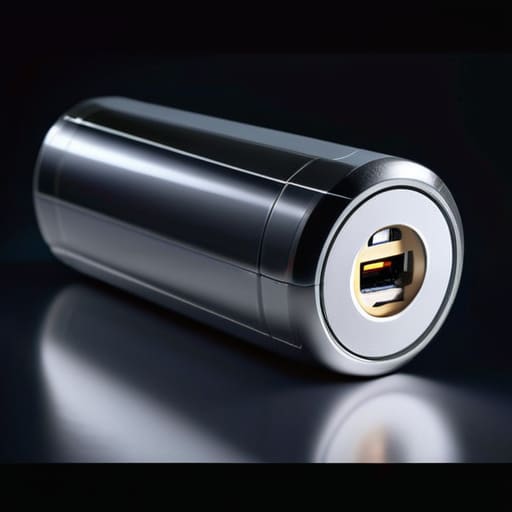
If you’re looking at the spec sheet and seeing a massive capacity for a suspiciously low price, stop right there. You’re likely looking at a unit packed with bottom-tier cells. In the world of lithium polymer vs lithium ion, there is no “one size fits all,” but there is a massive difference in how they handle stress. Lithium-ion (Li-ion) cells are the workhorses—cylindrical, stable, and generally more energy-dense. They are the standard for a reason. Lithium polymer (Li-Po), on the other hand, allows for those ultra-slim, “pocketable” designs you see everywhere. The catch? Li-Po cells are significantly more finicky and prone to swelling if the manufacturer cuts corners on the protective casing or the internal management system.
Don’t let a sleek chassis fool you into ignoring power bank safety certifications. Cheap manufacturers often use low-grade Li-Po cells to save a few cents per unit, sacrificing thermal stability to hit those aggressive price points. I’ve seen too many “budget” bricks that run dangerously hot during a high-wattage draw. If you aren’t seeing reputable testing data or recognized safety marks, you aren’t just buying a charger; you’re buying a potential fire hazard for your backpack.
Stop Reading the Box: 5 Practical Metrics That Actually Matter
- Check the PD (Power Delivery) Wattage: Don’t just look at the capacity; if you’re trying to charge a laptop and the bank only outputs 10W or 15W, you’re essentially carrying a very expensive paperweight. You need to verify the specific wattage output to ensure it actually meets your device’s minimum requirements.
- Demand a Real-World Conversion Rate: Every power bank loses energy to heat during the voltage conversion process. I always look for units that claim efficient circuitry; if a brand won’t provide technical specs on their controller efficiency, they’re likely hiding a massive energy leak.
- Inspect the Port Selection and Physical Integrity: A single USB-A port is a relic. I look for multiple USB-C ports that support bidirectional charging. Also, check the build quality—if the casing feels like cheap, hollow plastic, the internal components are likely substandard and prone to overheating.
- Verify the Pass-Through Charging Capability: If you plan on using the bank as a buffer while you’re plugged into a wall, you need pass-through charging. Most budget models fail miserably here, either refusing to charge the bank while in use or getting dangerously hot in the process.
- Scrutinize the “Safety Certifications” (and the fine print): Don’t take a “safety” claim at face value. Look for actual UL or CE markings, but more importantly, check if the manufacturer includes overcharge and short-circuit protection in their technical documentation rather than just burying it in a marketing bullet point.
The Bottom Line: Stop Buying Marketing, Start Buying Specs

Look, if you walk away with nothing else from this deep dive, remember this: stop letting manufacturers dazzle you with massive mAh numbers that vanish the second you plug in a modern smartphone. I’ve seen too many creators burn through their budget on “high-capacity” bricks that are nothing more than cheap, unstable cells masquerading as premium gear. You need to prioritize real-world energy density and cell chemistry over flashy packaging. Whether you choose the stability of Lithium Polymer or the density of Lithium Ion, make sure you are reading the fine print on discharge rates and actual usable capacity. Don’t let a glossy marketing campaign trick you into buying a paperweight that fails when you’re actually off the grid.
At the end of the day, the right power bank isn’t the most expensive one on the shelf; it’s the one that actually performs when your battery hits 5% and you’re miles from an outlet. Investing in quality gear is an investment in your own productivity and peace of mind. Stop chasing the hype and start trusting the data. Once you learn how to cut through the jargon, you’ll realize that making smart, informed decisions is the ultimate way to protect your bottom line and keep your workflow uninterrupted. Now, go find a tool that actually works as hard as you do.