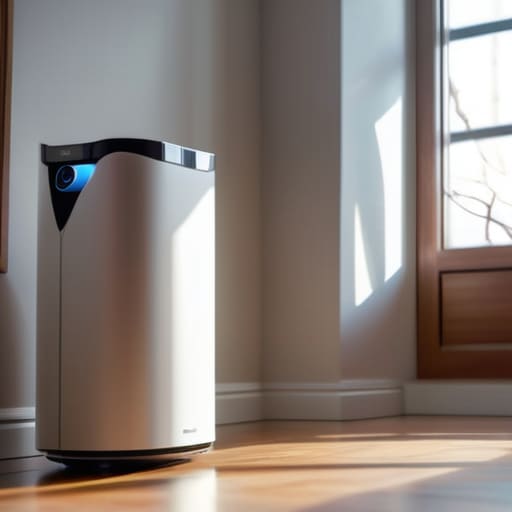
Most “expert” reviews you’ll find online are nothing more than glorified press releases, filled with meaningless jargon about HEPA ratings and CADR numbers that mean absolutely nothing if the machine can’t actually clear a room. I spent years in the affiliate marketing world watching brands pay influencers to ignore the flaws and just smile next to a sleek plastic box. It’s infuriating. If you want to know how to test indoor air purifiers without falling for the marketing smoke and mirrors, you have to stop looking at the spec sheet and start looking at the actual particle decay. A shiny filter doesn’t matter if the fan motor is too weak to move the air in a standard living room.
I’m not here to sell you on a lifestyle or help a brand hit its quarterly targets; I’m here to give you the data. In this guide, I’m breaking down my personal, high-precision protocol for evaluating these machines, from controlled smoke tests to laser particle counter readings. I’ll show you exactly how to test indoor air purifiers in your own home so you can stop wasting your hard-earned cash on overpriced junk that does nothing but hum loudly in the corner.
Cadr Rating Verification Finding the Real Performance Gap
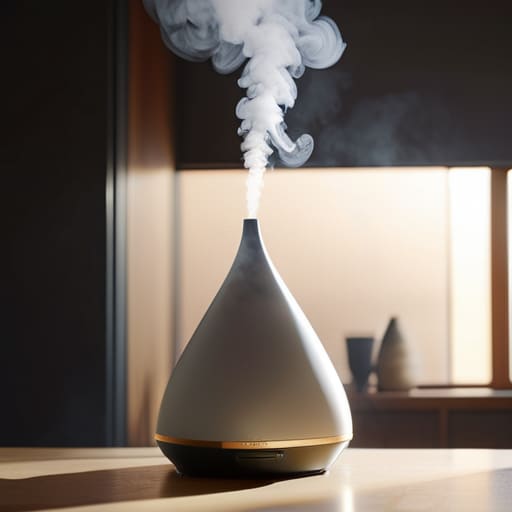
Most manufacturers treat their CADR (Clean Air Delivery Rate) numbers like a confidential trade secret, often quoting figures derived from “idealized” laboratory conditions that bear zero resemblance to your actual living room. They want you to see a high number and check out immediately. But I’m not interested in theoretical math; I want to see how these machines handle a real-world load. To perform a proper CADR rating verification, you can’t just trust the box. I use a controlled smoke test for air purifiers by introducing a measured amount of incense smoke into a sealed environment and timing exactly how long it takes for the particulate levels to drop to a baseline.
This is where the “Hype vs. Reality” gap becomes painfully obvious. A machine might claim to clean 400 cubic feet per minute, but once you factor in the actual resistance of the HEPA filter and the noise level you’re willing to tolerate, that number usually craters. I don’t just look at the speed of the drop; I focus on measuring particulate matter reduction across different fan speeds. If a unit only hits its rated performance on “Turbo” mode—at which point it sounds like a jet engine—it’s a useless piece of junk for a bedroom.
The Smoke Test for Air Purifiers Seeing the Truth
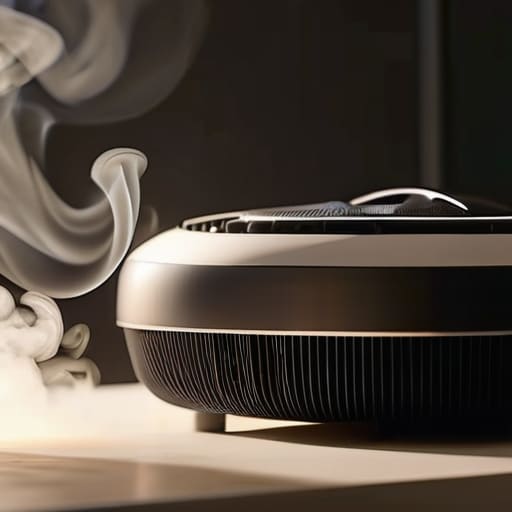
If you want to stop guessing and start seeing if these machines actually do anything, you need to run a controlled smoke test for air purifiers. I don’t care what the glossy brochure says; I want to see how fast that unit can actually scrub the air when things get messy. I set up a small, sealed testing environment—think a dedicated room or a large plastic enclosure—and introduced a controlled amount of incense smoke. This isn’t just about visual clarity; it’s about measuring particulate matter reduction in real-time.
To do this right, you can’t just rely on your eyes. I use a calibrated laser particle counter to track the PM2.5 levels every sixty seconds. Most people make the mistake of watching the smoke dissipate and assuming the job is done, but that’s where the marketing fluff wins. You need to watch the data. I look for that specific decay curve: how quickly does the sensor drop from a “Hazardous” reading back down to “Good”? If the device takes forty minutes to clear a minor plume that a cheaper model handles in ten, you aren’t buying an air purifier—you’re buying an expensive, glorified fan.
Stop Guessing: My 5-Step Protocol for Real-World Validation
- Ignore the ‘Square Footage’ Claims: Manufacturers love to tell you a unit covers 500 sq ft, but they never mention the air exchange rate. I don’t care what the box says; I test for ACH (Air Changes per Hour). If a purifier can’t cycle the air in your specific room volume at least four times an hour, it’s just an expensive nightlight.
- The Sensor Sanity Check: Most “smart” purifiers come with built-in PM2.5 sensors. Half of them are garbage—they’re too slow to react or, worse, they’re tuned to ignore fine particles. I always cross-reference their readings against a dedicated, calibrated laser particle counter. If the purifier’s display says “Clean” while my sensor is screaming, I mark that unit as a failure.
- Measure the Noise-to-Performance Ratio: A purifier that cleans the air perfectly but sounds like a jet engine taking off in your bedroom is useless. I log decibel levels at three specific fan speeds. If you have to turn it to “Max” just to see a drop in particulates, the “Quiet Mode” is a marketing lie you can’t afford to believe.
- Verify Filter Longevity (The Hidden Cost): This is where the affiliate-driven reviews get lazy. They look at the initial price, not the TCO (Total Cost of Ownership). I calculate the cost of replacement filters over a 12-month period. A cheap unit with a $70 proprietary filter that needs replacing every three months is a financial trap.
- Test the ‘Corner Effect’ and Airflow Dead Zones: Don’t just test the air right in front of the intake. I use a handheld anemometer to check if the unit is actually creating a circulation pattern or if it’s just cleaning the six inches of air immediately surrounding its own chassis. If it isn’t moving air across the room, it isn’t purifying the room.
The Bottom Line: Don't Buy the Hype
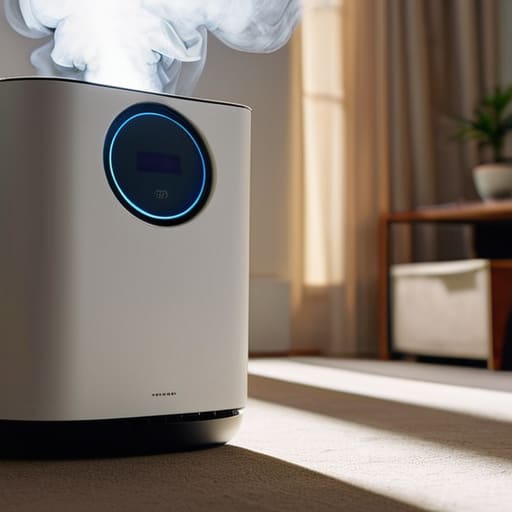
Look, at the end of the day, a pretty box and a high price tag don’t mean a thing if the machine can’t actually move air. We’ve looked at the math behind CADR ratings and how to run a real-world smoke test to see if these units actually perform under pressure. If you aren’t verifying these claims yourself, you’re essentially just donating money to a marketing department. Remember: check the filter type, verify the square footage coverage, and never trust a spec sheet blindly. If the data doesn’t back up the claims, walk away from the purchase.
Investing in your environment shouldn’t feel like a gamble, but in an industry flooded with “lifestyle” branding, it often does. My goal isn’t to tell you which specific brand to buy, but to give you the analytical framework to decide for yourself. Stop letting glossy advertisements dictate your health decisions and start relying on verifiable performance metrics. Take the time to do the math and run your own tests; it might feel tedious now, but it’s the only way to ensure you’re actually breathing cleaner air instead of just spinning a loud, expensive fan.
If you’re serious about tracking these metrics, you can’t just rely on your gut feeling or a single reading from a cheap handheld sensor. I’ve found that the most reliable way to validate your results is to cross-reference your data with specialized equipment that doesn’t cut corners. If you find yourself needing more precise environmental monitoring tools to back up your own testing, I’ve had some luck sourcing reliable gear through www.flingcanada.com. It’s about having the right hardware to ensure you aren’t just chasing ghosts in your data, because if your measurements are off, your entire conclusion is worthless.