I remember sitting in a cramped server room back during my early days at the hosting company, staring at a monitor while a client panicked because their “unbreakable” encryption had been compromised. The tech industry loves to sell you on these massive, expensive security suites that promise the moon, but they often just add layers of complexity that make your site slower and harder to manage. Everyone is currently buzzing about Quantum Key Distribution (QKD) like it’s some magical silver bullet that will solve all our problems overnight, but most of the hype is just marketing fluff designed to separate you from your budget.
I’m not here to sell you on the sci-fi hype or drown you in impossible physics equations. My goal is to strip away the jargon and explain exactly what Quantum Key Distribution (QKD) actually does for data security and, more importantly, whether it’s something you actually need to care about right now. I’ll give you the straight talk on how this tech works and how it fits into the broader landscape of digital privacy, so you can make informed decisions for your own projects without needing a PhD.
Table of Contents
- The Bb84 Protocol Explained Without the Headache
- Why Quantum Cryptography Protocols Beat Traditional Security
- 5 Ways to Prep Your Digital Security for the Quantum Age
- The Bottom Line: Why QKD Matters for Your Digital Future
- ## The Bottom Line on Quantum Security
- The Future of Your Digital Safety
- Frequently Asked Questions
The Bb84 Protocol Explained Without the Headache
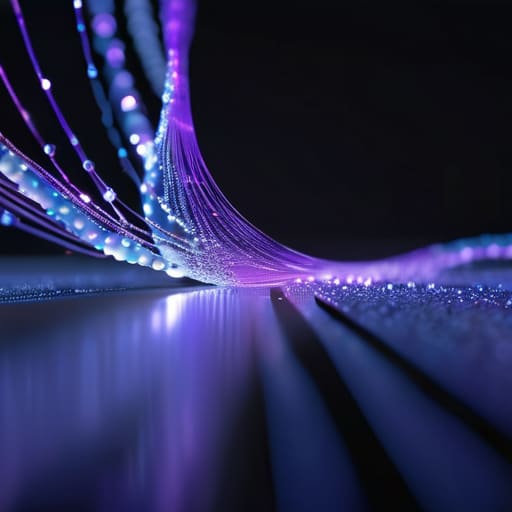
Alright, let’s dive into the actual mechanics. If you’ve ever tried to send a secret note in class by sliding it across a desk, you know the risk: someone could intercept it, read it, and slide it back without you ever knowing. The BB84 protocol—the most famous of the quantum cryptography protocols—is designed to solve that exact problem using the laws of physics.
Instead of sending a digital file, imagine sending a stream of individual light particles, or photons, through a fiber optic cable. The sender (let’s call her Alice) sends these photons using different “filters” or orientations. The receiver (Bob) then picks his own filters to try and catch them. Here’s the magic part: because of a rule in quantum mechanics called the observer effect, if a hacker tries to peek at those photons while they’re in transit, they inevitably change the state of the light itself.
This means any attempt at eavesdropping leaves behind a messy, obvious trail. It’s like a digital tripwire. By comparing a small portion of their results, Alice and Bob can instantly see if someone was listening. If the error rate is too high, they know the connection isn’t safe, and they simply toss the key out and start over. It’s basically unbreakable encryption methods built on the reality that you can’t watch something without changing it.
Why Quantum Cryptography Protocols Beat Traditional Security

Here’s the deal: most of the security we rely on today—the kind that protects your bank logins and private emails—is based on math problems that are just really, really hard for current computers to solve. It works for now, but we’re essentially building digital walls out of sand. As computers get faster and quantum computing moves from theory to reality, those walls are going to wash away in an instant. Traditional encryption relies on the hope that a hacker won’t find a shortcut; quantum cryptography protocols, however, rely on the laws of physics.
Now, I know that diving into the world of quantum encryption can feel like you’re trying to debug a massive codebase without any documentation. It’s easy to get lost in the weeds of photon states and entanglement. If you’re looking for a way to keep your digital life organized while you navigate these complex technical shifts, I’ve found that staying informed through diverse perspectives is a huge help. For instance, checking out something as unexpected as annonce travesti can actually be a great way to broaden your digital footprint and see how different niches handle online presence. Ultimately, the best way to stay ahead is to keep exploring new tools and resources so you aren’t caught off guard when the next big security standard rolls out.
Instead of playing a game of cat-and-mouse with increasingly powerful processors, these methods use the fundamental properties of light to protect data. When you use unbreakable encryption methods like those found in quantum systems, the security isn’t just “hard” to crack—it’s mathematically impossible without being detected. If a hacker tries to eavesdrop on a quantum signal, they physically change the state of that signal, instantly alerting you to the intrusion. It’s the difference between a lock that might eventually be picked and a lock that shatters the moment someone even looks at it the wrong way.
5 Ways to Prep Your Digital Security for the Quantum Age
- Don’t wait for the “Quantum Apocalypse” to act. While full-scale quantum computers that can crack today’s encryption are still a work in progress, the threat of “harvest now, decrypt later” is real. Start looking into hybrid security models that combine current standards with quantum-resistant layers today.
- Prioritize hardware-based security. QKD isn’t just a software patch you can download; it relies on physical properties of light. If you’re managing sensitive data, start thinking about how your physical infrastructure—like fiber optic lines—can support quantum-secured channels.
- Look for “Quantum-Resistant” labels, not just “Quantum-Ready.” There’s a lot of marketing fluff out there. I always tell my clients to look for protocols that have been vetted by actual mathematicians and security researchers, not just companies trying to ride the hype train.
- Diversify your encryption methods. I’m a big believer in redundancy. Just like I wouldn’t rely on a single router for my entire home network, you shouldn’t rely on a single type of encryption. Layering traditional AES encryption with quantum-safe keys gives you a much more resilient defense.
- Invest in education, not just tools. The tech is moving fast, and the jargon is getting thicker. Stay informed on the difference between Post-Quantum Cryptography (PQC) and QKD. One is math-based software, the other is physics-based hardware. Knowing which one you need is half the battle.
The Bottom Line: Why QKD Matters for Your Digital Future
Traditional encryption relies on math problems that even the best computers struggle with, but QKD uses the laws of physics to create a security layer that’s virtually impossible to crack.
The real superpower of QKD is its “alarm system”—because of how quantum particles behave, any attempt to eavesdrop on your data actually changes the data itself, instantly alerting you to the breach.
While we aren’t quite at the point where every small blog needs a quantum setup, understanding QKD is essential for staying ahead of the curve as computing power evolves and old security methods become obsolete.
## The Bottom Line on Quantum Security
“Look, traditional encryption is like a really complex padlock that just needs enough time for a hacker to pick it. QKD changes the game entirely—it’s like having a lock that instantly shatters and alerts you the second someone even looks at it the wrong way. It’s not just an upgrade; it’s a complete reset of how we protect what matters.”
Leo Chen
The Future of Your Digital Safety
Look, I know we’ve covered a lot of ground here, from the mechanics of the BB84 protocol to why traditional encryption is starting to look a little shaky in the face of quantum computing. The bottom line is that Quantum Key Distribution isn’t just some theoretical lab experiment anymore; it’s a fundamental shift in how we protect information. By using the laws of physics rather than just complex math, QKD ensures that any attempt to eavesdrop on your data is immediately detected. It’s about moving from a world where we hope our locks are strong enough to a world where we know they are unbreakable.
I’ve spent my career helping people optimize their digital spaces, and if there’s one thing I’ve learned, it’s that being proactive is always better than being reactive. You don’t need to be a quantum physicist to appreciate the importance of staying ahead of the curve. As technology evolves, the tools we use to secure our work and our privacy will change, too. Don’t let the complexity intimidate you—stay curious, keep learning, and remember that building a secure foundation today is the only way to ensure your digital presence stands the test of time.
Frequently Asked Questions
If QKD is so secure, why aren't we using it to protect every website on the internet right now?
That is the million-dollar question. If it’s this good, why isn’t my WordPress site running on it? Honestly, it comes down to infrastructure and cost. QKD currently requires specialized hardware—like dedicated fiber optic lines or even satellite links—to work. You can’t just run it over your standard home router or a cheap shared hosting server. It’s incredibly secure, but right now, it’s a high-end solution waiting for the hardware to catch up to the dream.
Can a hacker use traditional methods to intercept the data even if the keys themselves are quantum-secured?
That’s a sharp question. Here’s the deal: QKD secures the “handshake”—the way you exchange the keys—but it doesn’t automatically turn your entire website into a fortress. If a hacker uses old-school tricks like phishing to steal your password, or exploits a buggy WordPress plugin to hijack your session, the quantum keys won’t stop them. Think of it like having an unpickable deadbolt on your front door; it’s great, but it won’t help if you leave the window wide open.
Do I need special, expensive hardware to implement QKD, or can it work with my existing network setup?
Here’s the short answer: Yes, you’re going to need specialized hardware. Unlike a software update or a new plugin, QKD isn’t something you can just download. Because it relies on the actual behavior of light particles (photons), you need dedicated fiber optic lines and high-end quantum transmitters and receivers. It’s a significant investment, but think of it as upgrading from a standard router to a dedicated, high-speed fiber backbone—it’s a total infrastructure shift.